Make your website work for AI agents. See what happens next.
ChatGPT, Gemini, Claude, Perplexity and AI agents read your site before many buyers ever visit. LightSite makes your pages and tools easy for them to use, shows which pages they request and what AI-referred visitors do next, and helps your team get the fixes done. Tracking what AI answers say about you is included as a supporting check.
01 — Make your website readable for ChatGPT, Gemini and AI agents
LightSite deploys a structured layer over your existing site: dynamic JSON-LD @graph (Organization, WebSite, WebPage, Product, FAQPage, Article, BreadcrumbList), static AI manifests under /ai/*.json, agent manifests at /.well-known/ai-plugin.json and /.well-known/skills.json, and an auto-generated /ai-sitemap.xml — live in 5–15 minutes.
02 — Give AI agents tools they can use on your site
Expose your business as Skills and, where supported, WebMCP tools: clear, read-only actions an agent can call to search or ask your site directly.
03 — See which pages AI bots and agents use, and what visitors do next
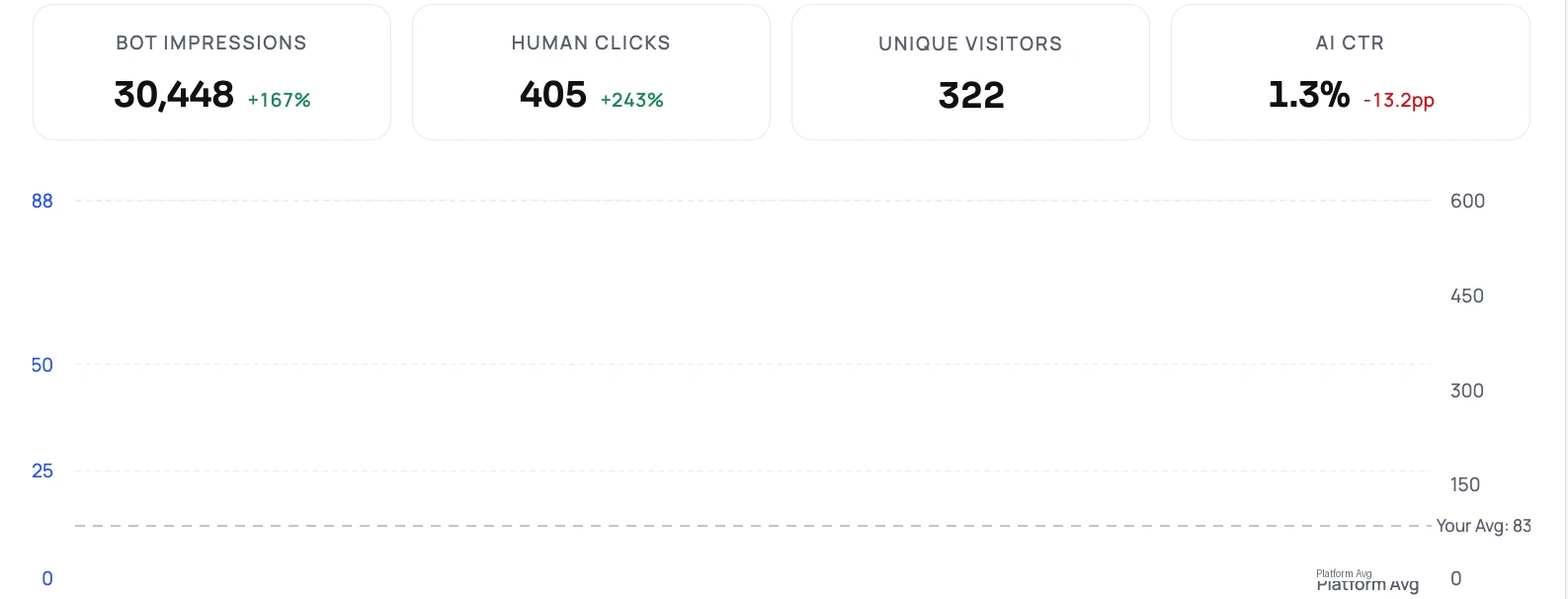
Per-bot request logs (GPTBot, ClaudeBot, PerplexityBot, Google-Extended, Bingbot), page-level requests, tool calls, AI-referred human visits and the actions after them, crawl-activity drop alerts. A bot request shows a page was fetched. It is not an answer impression, and a click on your site is not a purchase, so each is reported separately. See AI agent journey tracking.
04 — Get the work done, with your team's approval
LightSite's agents draft content grounded in your structured data, fix technical access, surface placement opportunities, find unlinked mentions and prepare outreach. Your team reviews what goes out.
05 — Track what ChatGPT and Gemini say about you
Sampled buyer-intent questions across ChatGPT, Gemini, Claude and Perplexity show mentions, share of voice, sentiment and citation sources. Useful for diagnosing why things change; a sample, not a count of what real people saw.
FAQ
What can I actually measure? AI crawler and agent requests to each page, tool calls on your site, and real people arriving from ChatGPT, Claude, Perplexity and Gemini with what they did next. Comparing visits to bot requests gives a crawl-to-visit ratio. It is not answer CTR: answer impressions only come from the AI platforms' own consoles.
Why is that better than mention tracking? Assistant answers change every time you ask, so mention counts wobble on their own. Bot visits and human visits are logged events — you can plan and report on them.
How does this help me decide what to do next? Page by page: read by bots but no human visits means fix that page's answer. Read and clicked means it works — make more like it. No bot visits at all means it isn't reachable yet.
Can I see if my off-site work paid off? Yes. Compare AI bot visits before and after a Reddit thread, LinkedIn push, PR mention or new comparison page and you see which ones moved AI attention.
How is this different from a standard SEO platform? Traditional SEO platforms optimize for blue-link search. LightSite optimizes for AI engines that synthesize answers — which requires a machine-readable layer, AI-bot analytics, and agentic execution rather than keyword reports.
Do I need to rebuild my site? No. LightSite deploys alongside your existing site. The machine-readable layer, AI sitemap, agent manifest, and Skills API publish on your domain in 5–15 minutes.
Which AI engines do you cover? ChatGPT, Gemini, Claude, and Perplexity for visibility tracking; GPTBot, ClaudeBot, PerplexityBot, Google-Extended, Bingbot, and more for bot analytics.
Where do agents fit in? After the data layer is live, agents draft content, update structured data, surface placement opportunities, and prepare outreach — so your team ships work, not reviews dashboards.
Who is this for? Mid-market B2B and B2C teams whose buyers already ask AI engines for vendor recommendations — typically VPs of Marketing and Heads of Growth at SaaS, B2B services, and ecommerce companies.